






The astonishing world of shrimp
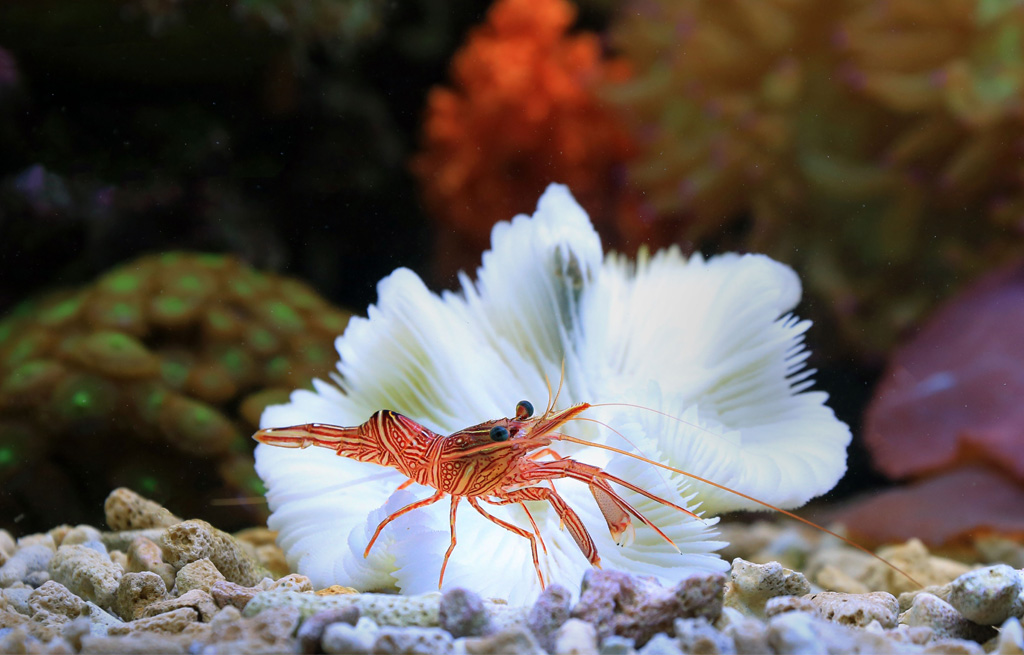
While shrimp were once considered as an exotic treat, most Austrians have had their own experiences with them by now – whether by enjoying them in a variety of delicious dishes or by admiring them in aquariums. Yet, very few people are aware of the anatomical marvel hidden beneath their shells. With this article, we aim to bridge that knowledge gap. Let’s take a closer look at the biology of these fascinating creatures.
At first glance…
Even a quick look reveals that the biological structure of a shrimp follows a clear pattern. Its body can be broadly divided into two sections: the head, which is fused with the thorax – a region known as the cephalothorax – and the abdomen or pleon, which follows it. The latter consists of several segments and makes up a large portion of the body. On the underside of these graceful crustaceans, there are five pairs of walking legs, which serve a variety of different functions.
Every step of the way…
In total, shrimp possess five pairs of walking legs – ten legs in all. This is why they belong to the order Decapoda, or “ten-footed” crustaceans. Depending on the species, some of these legs may be modified into claws. These various appendages are used not only for locomotion but also for feeding, sensing the environment, and reproduction. Should one of these appendages be lost, shrimp are capable of partially or even fully regenerating it over the course of several molting cycles – a remarkable example of their regenerative capacity.
Strong Defense
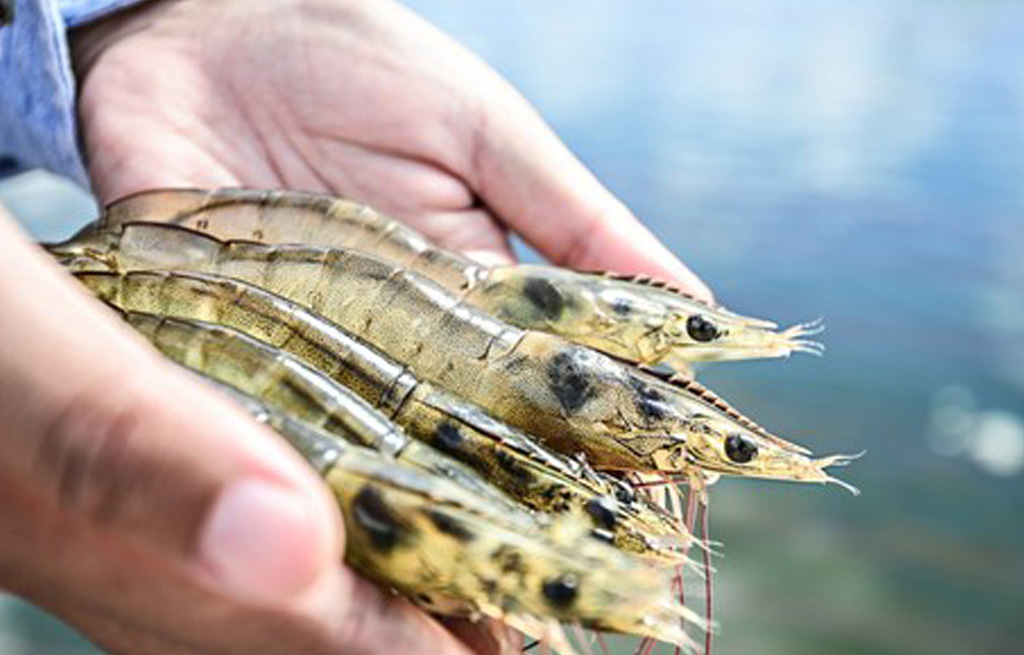
Since shrimp lack an internal skeleton, they are classified as invertebrates. Instead, their bodies are stabilized by an external skeleton, known as an exoskeleton. The cuticle – composed of several distinct layers – protects the body and the underlying tissues. When faced with danger, shrimp can use their powerful abdominal muscles and tail fan to execute a rapid escape in an instant. Shrimp are, quite simply, true masters of survival.
A life of many facets
Shrimp perceive their surroundings, in part, through their compound eyes. These complex visual systems consist of numerous individual units called ommatidia, each of which captures a portion of the field of view. The precise way in which shrimp see their environment varies by species. Their eyes are adapted to specific lighting conditions and habitats, enabling them to detect movement, variations in brightness, and – in some species – different wavelengths of light.